Zotbox – Global Illumination

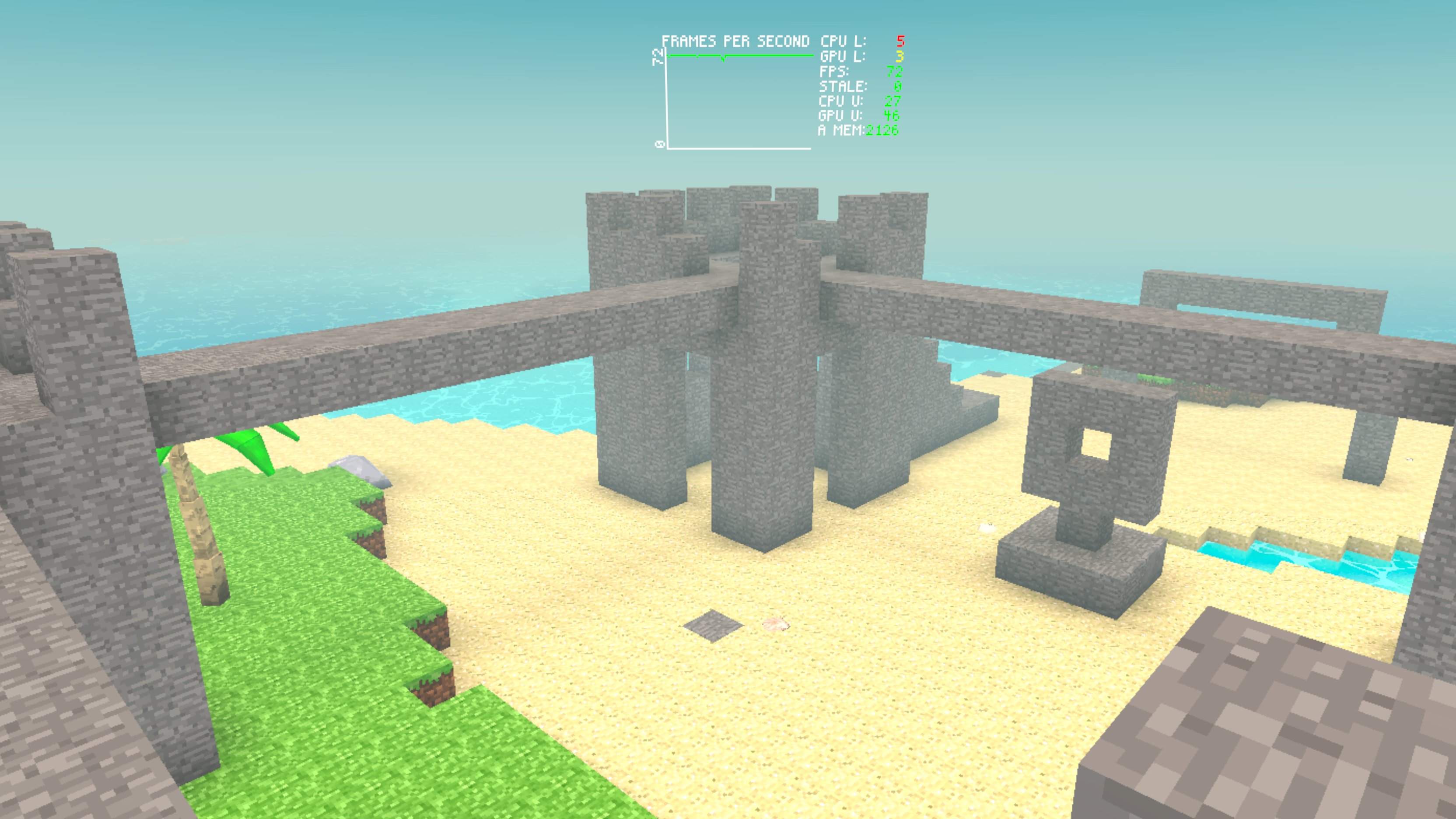
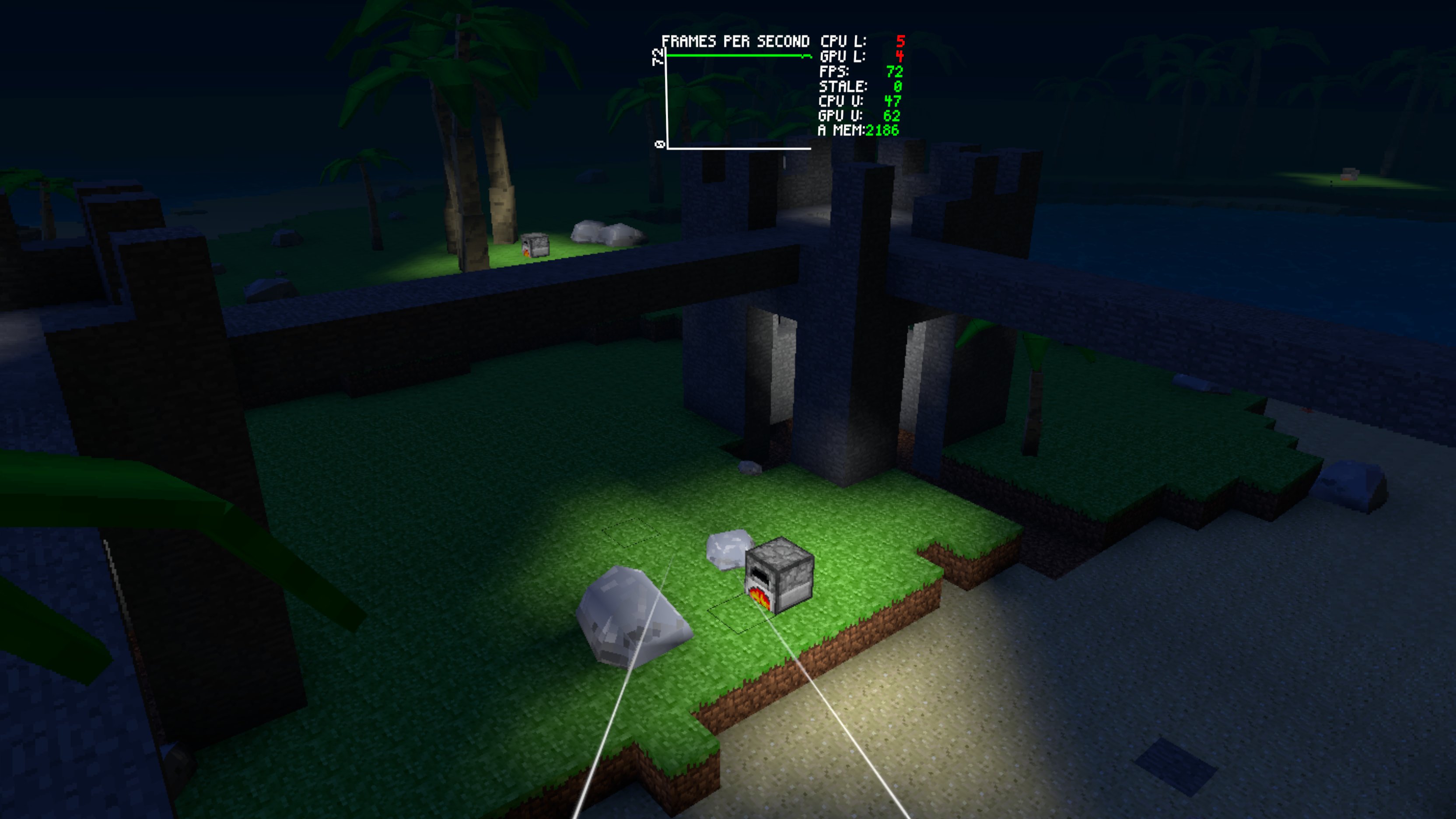
I am excited to show off a preview of the block based global illumination in Zotbox. This is similar to the vanilla Minecraft skylight plus block light GI approach. However if you look closely you can see how the detail objects like the rocks and trees are also lit correctly.

For example the rock is lit on one side with the light and casts some occlusion on the back side. This is a combination of the GI and the detail objects ‘occupying’ blocks. The block lighting is then applied to the detail models as vertex colors. It makes a really nice basic lighting effect.

The scene is just one I made quickly on the Quest 2 while playing around and testing with some very rudimentary building tools. It’s just like Minecraft – running around adding and removing blocks. Loads of fun in VR!
Visual Studio Code

For all the Unity devs out there – switch to Visual Studio Code now!

I have been doing a fair amount of Web3D work in the past few years and started using it a while ago for frontend development with Babylon.js and React/TypeScript etc. I have now been using it with Unity for a year or so and will never go back to Visual Studio.

Visual Studio Code is a fantastic IDE with full Unity support and is a dream to work with. It’s just cleaner, simpler, and has a more streamlined workflow. Unless you have some complex need for Visual Studio switch now, and don’t look back.

Here is Visual Studio Code, the Unity for Visual Studio Code extension, and the .NET SDK which is also needed.

Zotbox – Ambient Occlusion

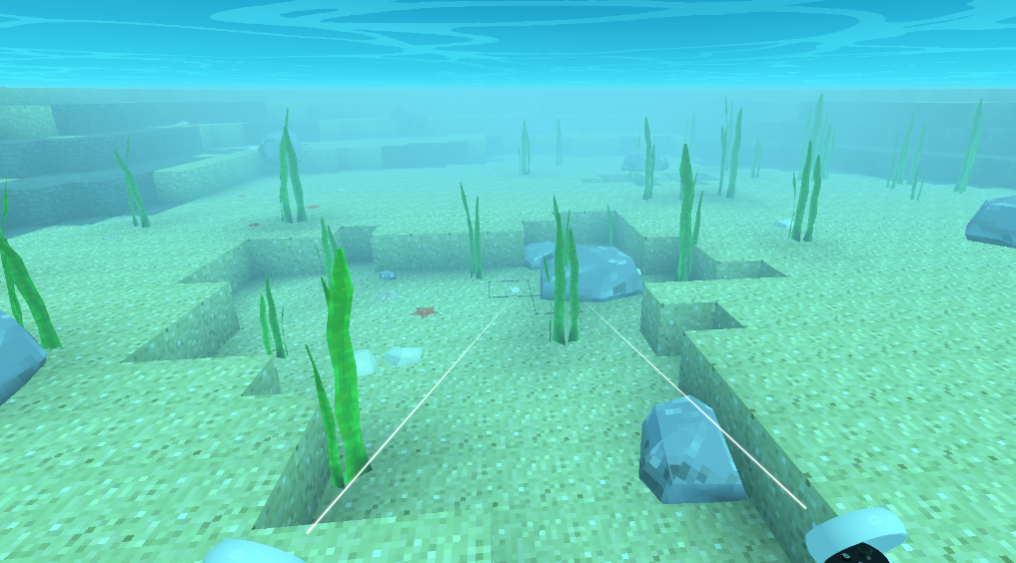
I’ve been working on the lighting system for Zotbox, and here’s a sneak peek of the block-based ambient occlusion applied to the blocks and detail models including the blocks the detail models ‘occupy’! This really elevates the block visuals and helps to ‘anchor’ the details in the terrain.

WordPress

Just wanted to give a shout out to WordPress.com since they have done a great job helping me move my blog. It started out as a Amazon LAMP server with WordPress that I built and managed myself. That was almost 10 years ago!

Although fun I just don’t have the time to deal with all the additional work to maintain it. The linux image was no longer supported and the php version needed to be upgraded again and I decided it was just time to let it go and move on to proper hosting. There are huge benefits to that with lots of integrated extras!

Anyway if you are doing a WordPress site I highly recommend them.

Zotbox – Water

I now have the basic terrain system with water working for Zotbox. This all runs very smoothly on the Quest 2 with a lot of headroom for future CPU/GPU needs. I use the Quest 2 for testing since this is the baseline. The terrain is scalable so on Quest 3 there will be a larger view distance for example. Getting to this point hasn’t been easy and I am very excited for where this is… Continue reading

Underwater Detail

Some more Blockbench models I made with my meager modeling skills. These are for underwater and beach details. Stones, seagrass, shells, corals, and starfish etc.

I am currently building a biome system which will control the detail models. For Zotbox there will be a mixture of blocks and detail models that make up the terrain. Detail models will work just like blocks being easily created or destroyed and tied to mechanics.

Zotbox – Terrain

I have been slowly working on rebuilding the entire terrain system for Zotbox with a Minecraft style block terrain while also shifting over to the URP from the legacy built-in renderer. I am now at a point where I am excited to reveal all the coolness of where this is heading. Zotbox and No Future were originally created using a tile based terrain system that was flat with each tile being 10mx10m. This provided a… Continue reading

Modeling with Blockbench

I am thoroughly enjoying making models in Blockbench. It is simple and intuitive but has a lot of flexibility. I can see why it’s a really popular tool in the Minecraft community for working on mods.

For someone who does programming for a living I can actually put out some good models with this tool. It is also the art style that helps. Having things more blocky/chunky/low poly and being able to paint rough textures makes all the difference.

Minecraft has been so successful because of it’s simplistic art style. That simple retro pixel art feeling is so nice and comforting. I really want to go in that direction for Zotbox but take it up a notch like Hytale.

Here is the hello world of modeling – a crate!

No Future – Zombies

I feel like I have been making some good progress on No Future and my underlying VR ARPG sandbox lately and want to share details. One of my various efforts towards a vertical slice is building some zombies and I am at a new milestone with them. Check out this video which I captured on the Quest 2. These are the zombies from the Synty Studios Simple Apocalypse pack that I am currently working with. They… Continue reading

Hurricane VR Physics Interactions

I love the foundation of physics interactions in Half Life: ALYX and I want my VR ARPG sandbox to essentially work the same way.

Hands shouldn’t go through objects. Grasping and interaction should feel natural like real world objects. Things should seem like they have weight with some requiring two hands to move. This kind of interaction is important and creates a sense of presence.

Hurricane VR is a physics interactions framework that has everything to achieve this. There is also a companion physics based rigid body controller that integrates with it called HexaBody VR. Together they form a starting point for BONEWORKS or Blade & Sorcery levels of interaction.

I have been working with both frameworks and highly recommend them. There is a significant learning curve with them but they are well written and actively being developed with a great community on discord.

These assets are definitely bringing next level interaction to VR developers!

SHARE THIS POST